
Hurricane season runs through November 30, and every business owner in Palm Beach, Broward and Miami-Dade counties knows the drill: watch the cone, board up, and wait. But there's one question that often gets answered too late — when the office closes and the team can't get in, who picks up the phone? Patients still call about medications. Customers still call about appointments. And if no one answers, they call your competitor next.
Hurricane preparedness for businesses usually focuses on generators, water, and boarding windows. Phone continuity deserves the same attention on that list, because a missed call during a storm isn't just inconvenient — it's often the first impression a worried customer or patient forms about whether you'll be there when they need you.
Why Business Phone Continuity Matters More in South Florida
South Florida businesses face a specific pattern: storms interrupt operations for days at a time, sometimes with little warning once a system strengthens quickly. Staff may be dealing with their own evacuations, power outages, or flooded roads, which means the people who'd normally answer your phones are unavailable exactly when call volume spikes with cancellations, rescheduling requests, and questions about whether you're open.
A landline tied to a single physical office is one of the most fragile parts of a small business's storm plan. If the building loses power or phone lines go down, that number simply stops working — no forwarding, no backup, no way for callers to reach you at all.
Before the Storm: Set Up Real Phone Continuity
The good news is that fixing this doesn't require a lot of new equipment. Most of it is configuration, done in advance:
- Move to a cloud-based phone system if you haven't already. Cloud phone lines aren't tied to a single office location, so they keep working even if your building loses power.
- Set up call forwarding to a cell phone, a manager's home line, or an answering service, and test it before a storm is in the forecast — not during one.
- Record an emergency greeting in advance that you can activate quickly, letting callers know you're monitoring for closures and how to reach you.
- Write down your storm phone plan and share it with everyone on staff, so nobody is guessing about who's responsible for calls on a given day.
These steps matter most for medical, dental and veterinary practices, where a missed call can mean a patient in pain, a medication question, or someone unsure whether to head to an emergency room instead of waiting for you to reopen.
During the Storm: Let an AI Answering Service Cover the Gap
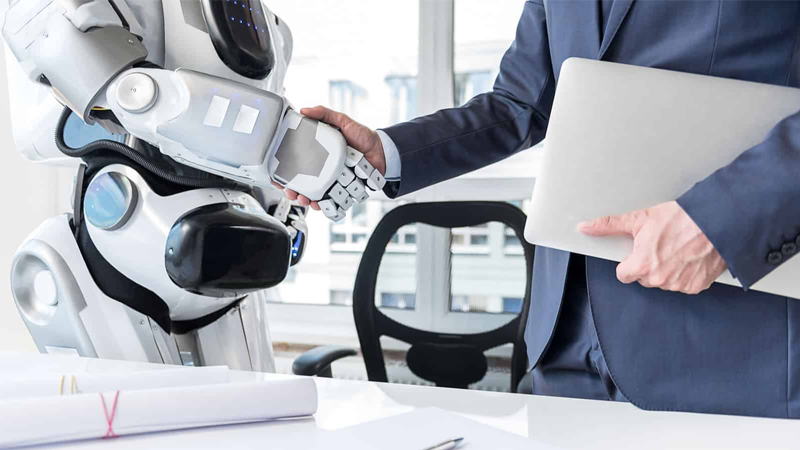
This is where an AI receptionist earns its keep. When your team can't safely get to the office — or the power's out and the building itself isn't accessible — an AI answering service keeps taking calls around the clock, without anyone needing to staff a phone line.
NPA Global's AI Agent Stack, powered by the Quantum Voice Intelligence Core, answers in your business's voice, tells callers your current status, takes messages, and can flag urgent calls for a callback the moment someone's available. For a medical or dental office, that might mean routing a caller who mentions severe pain or a medication issue differently than someone confirming a routine appointment. For a retail or service business, it means callers get a clear answer about hours and reopening instead of a dead line or a full voicemail box.
None of this requires anyone to be on-site. The AI receptionist runs on cloud infrastructure, so as long as it's configured before the storm, it keeps working through outages that would otherwise leave your phone silent for days.
After the Storm: Catch Up Without Losing Customers
Once the storm passes, the message backlog is often the second challenge. An AI receptionist that's been logging calls throughout the closure gives you an organized list — who called, when, and what they needed — instead of a wall of unheard voicemails to sort through manually while you're also assessing storm damage.
Pair that with two-way texting to send a quick "we're reopening" message to everyone who called, and you avoid the slow trickle of missed reconnections that usually follows a closure. Patients rebooking appointments, customers confirming orders, anyone who called during the outage — they all get a response faster, and your staff isn't stuck making the same callback twenty separate times.
A Short Checklist Before the Next Storm
Hurricane season isn't over, and preparation now is far easier than scrambling once a storm is 48 hours out. Before the next system forms:
- Confirm your phone system works from a cloud connection, not just an office landline.
- Test call forwarding to a cell phone or backup number.
- Record or update an emergency status greeting.
- Decide who's responsible for updating your phone message during a closure.
- Set up an AI answering service so calls get handled even when no one can get to the office.
Most of these steps take less time to set up than a single storm-prep run to the hardware store, and once they're in place they keep working for every future storm, not just the next one. An AI receptionist that answers reliably during a hurricane closure is the same technology that can answer overflow calls on a busy Tuesday or cover the front desk after hours — it's not a seasonal fix, it's a practical upgrade to how your phones work year-round.
Put AI to work for your team: the NPA AI Agent Stack.
← Back to Work It!